10 February 2026
Thank you for saving Leicestershire’s Bronze Age Torc
UPDATE - FUNDING SECURED! Thank you so much - further details coming soon.
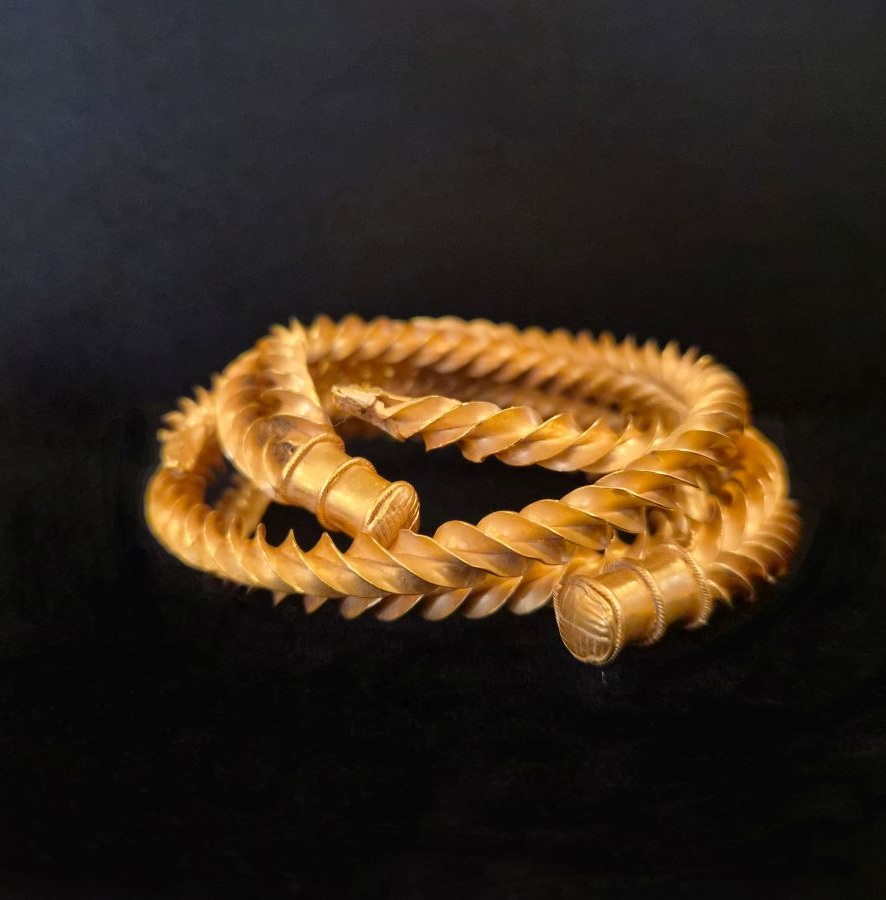
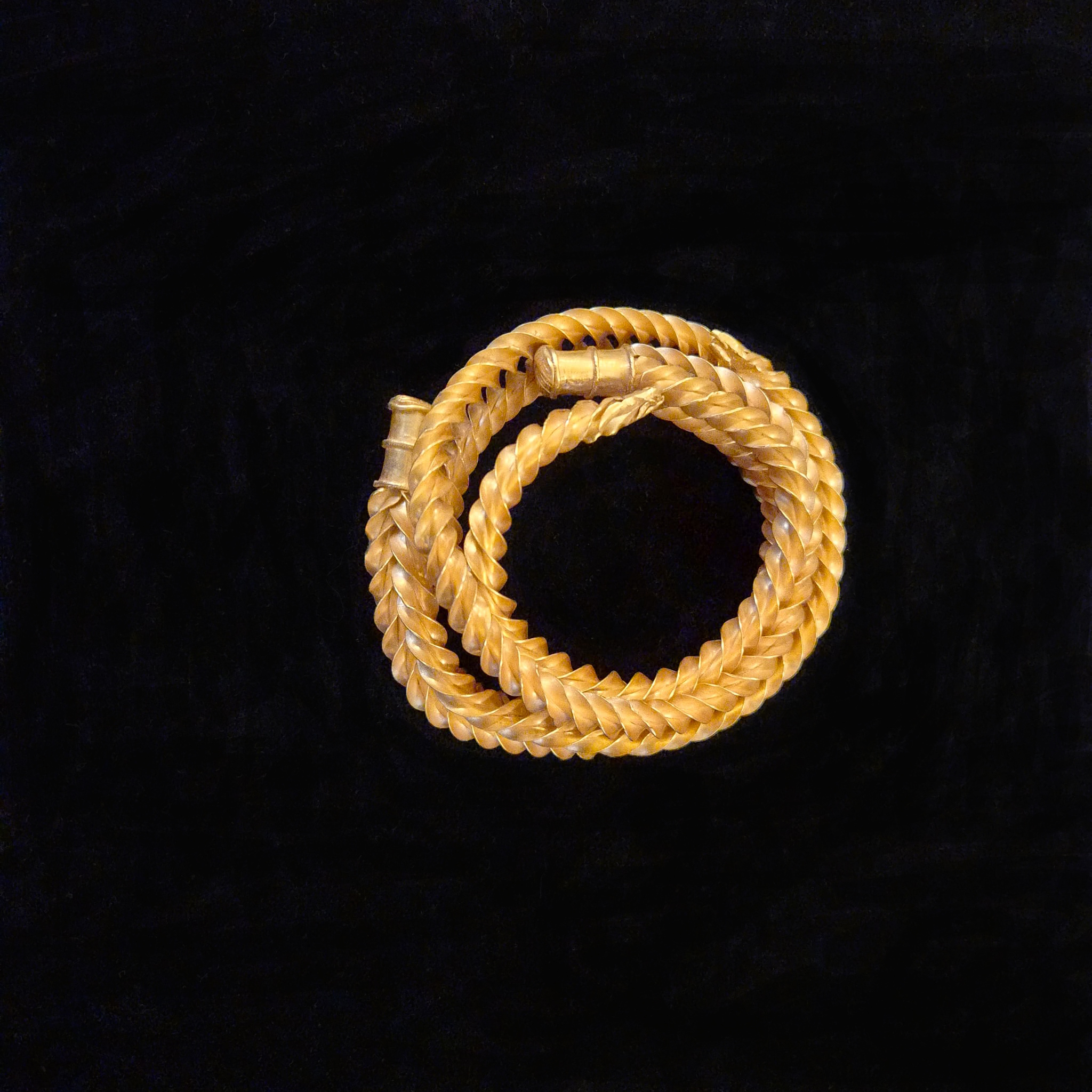
The Leicestershire Torc © The Trustees of the British Museum

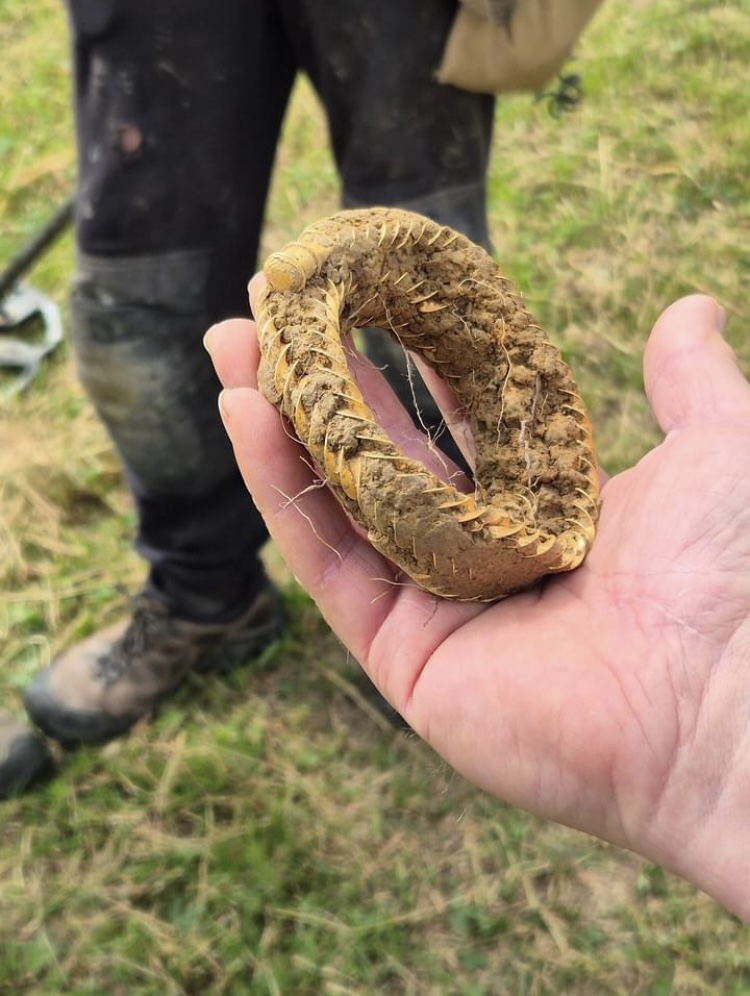
The Leicestershire Torc soon after discovery in July 2024.

The Leicestershire Torc is a stunning 3,200-year-old gold object dating to the Middle Bronze Age period and is the only torc ever discovered in the county. It was a piece of very high-status jewellery, possibly originally worn around the middle like a belt and later modified to be worn around the neck. Finally, it was coiled prior to being buried in the ground.
Saving the Leicestershire Torc
The Leicestershire Archaeological and Historical Society is launching an appeal for funds to enable Leicestershire Museums to acquire this nationally significant object. If enough is not raised, the future of the torc is uncertain. It may never be displayed in Leicestershire, and could even end up in the hands of a private collector in the UK or abroad. If this were to happen the object could effectively disappear from sight, denying future generations the opportunity to see for themselves the objects of their own past. This would be hugely disappointing.
With your help, the acquisition will allow an Accredited Museum to save and add an important archaeological object to its collections, to conserve, preserve, research and make it accessible to the public in a variety of ways and encourage audiences now, and in the future, to find their own connections to this unique Leicestershire find. If successful, the object will be displayed at Harborough Museum, Market Harborough.
SUPPORT THE APPEAL HERE (takes you to external Crowdfunder website)
Finding the Torc
The torc was discovered in the Harborough District in July 2024 by metal detectorist Robert Ward. Prior to that it was last seen 3,200 years ago when it was coiled and buried in a hole with a stone placed on top.
Following reporting with the Portable Antiquities Scheme, the Coroner declared the find Treasure under the 1996 Treasure Act and the find was independently valued at £150,000 as part of the process.
Leicestershire Museums have so far raised £126,837 from national (Art Fund, the Arts Council England/V&A Purchase Grant Fund) and local (LAHS Acquisitions Fund, the Market Harborough Historical Society and the Leicestershire Fieldworkers) funders. Further funding applications are currently being considered which may reduce the £23,163 gap. LAHS are initially aiming to raise £10,000 of this remaining shortfall. Help us with the last push to secure the remaining funds and save this wonderful find for display within the county.
What is a Torc?
A rigid neck ring, typically open at the front made from twisted metal, made to be worn as jewellery.
The Leicestershire Torc was coiled into the shape we see now. We aren’t sure why, but other torcs found in Britain have been treated in the same way. This possibly fits into a pattern seen in other Middle Bronze Age finds of deliberately destroying or ritually ‘killing’ objects prior to burial or casting into water.
It is constructed of three twisted strands of gold connected at the ends with unique decorated cylindrical terminals. One of the strands was broken and the broken ends were hammered. When found by the metal detectorist, a stone had been placed on top of the object. Did someone want to mark the burial spot?
If successfully acquired, Leicestershire Museums will work in partnership with the University of Leicester to enable a full scientific analysis of the object. This will tell us more about how the torc was made, modified and prepared for burial and give an insight into the minds of the people of the Bronze Age.